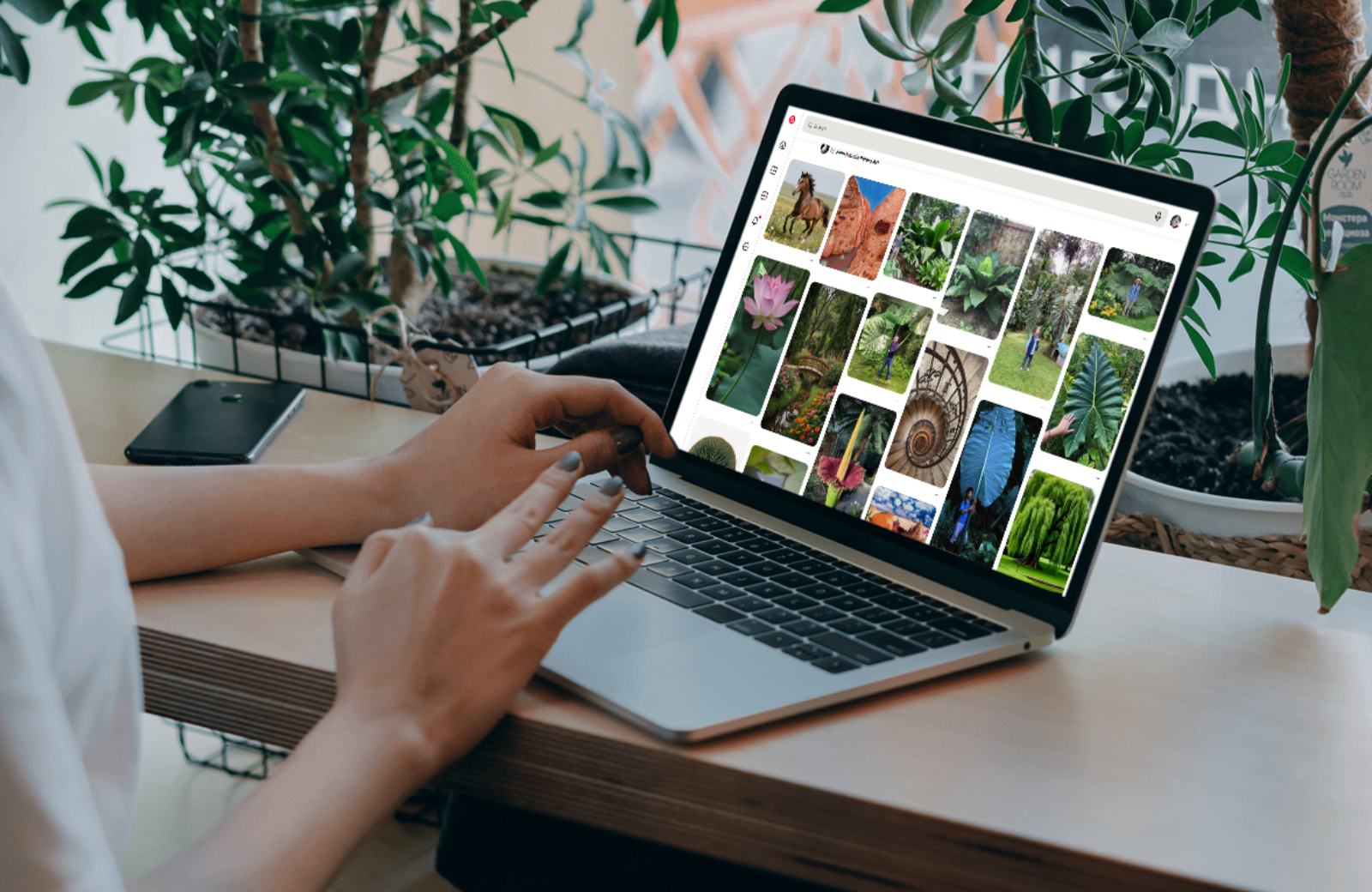
Most brands treat Pinterest like a visual portfolio. They post pretty images to aesthetically organized boards and wait for the "likes" to roll in. That is not a strategy. That is a mood board. And mood boards do not generate traffic.
The reality is that Pinterest is a search engine (a visual one at that), not a social media platform. Its algorithm works more like Google than Instagram. Users do not just scroll to see what their friends are doing; they type in exactly what they are looking for. Whether it is "boho living room ideas," "psychedelic art" or "stained glass beginner projects," Pinterest surfaces the pins that best match that query. If your pins are not optimized for the right keywords, you are invisible, regardless of how good they look.
Where Keywords Actually Live
To stop being invisible, you have to feed the algorithm the data it needs. Most accounts optimize one or two areas and leave the rest empty or generic. That is a significant missed opportunity for reach.
On Pinterest, your "SEO footprint" lives in five specific places:
- Profile Description: Your bio should clearly state what you do using your primary industry keywords.
- Board Titles: Ditch the "cute" names and use the actual terms people search for.
- Board Descriptions: Use this space to provide context and related keywords for the entire collection.
- Pin Titles: This is your headline. It needs to be clear, compelling, and keyword-rich.
- Pin Descriptions: This is where you go deeper. Explain what the pin is about and include a clear call to action.
The Compounding Advantage
The most powerful thing about Pinterest is its shelf life. On Instagram or LinkedIn, your content has a lifespan measured in hours or days. On Pinterest, a well-optimized pin has a shelf life measured in months or even years.
A pin you publish today can continue to show up in search results in 2027 and beyond. This creates a compounding effect where your traffic grows over time without you having to constantly create new content to stay relevant. This is why we consider Pinterest the best long-form ROI channel for content marketing, especially for e-commerce, artists, studios, and service businesses with strong visual elements.
The Strategic Takeaway
Stop viewing Pinterest as a place to be "pretty" and start seeing it as a place to be "found."
- Audit for Keyword Gaps: Look at your existing boards. If the titles are vague, rename them immediately.
- Rewrite Descriptions: Do not leave your board or pin descriptions blank. Use every character to help the search engine understand your content.
- Prioritize Strategy Over Aesthetics: Build a workflow that front-loads the keywords in your titles and descriptions before you even open a design tool.
Does the distinction between social media and search engines matter? Absolutely. One requires constant feeding to stay alive, while the other builds an asset that works for you while you sleep. When you understand the rules of the game, you can turn a simple image into a long-term traffic driver.
Are you still building a mood board, or are you ready to start building a search-optimized traffic engine?